

Soundbar Matter Integration: Unified Cross-Platform Control
By Maya Chen • 3rd Feb
As apartment dwellers know, a seamless smart home audio system shouldn't mean choosing between conversation clarity and neighbor peace. When your mountable sound bars live alongside smart lights and thermostats, disjointed control becomes the real noise pollution. That's why soundbar Matter protocol integration finally solves the fragmentation that's plagued compact rooms for years, giving you true cross-platform audio control without ecosystem lock-in. Forget wrestling with CEC failures or volume spikes that breach quiet-hour agreements. Matter's IP-based protocol (built on Thread and Wi-Fi) creates a single control plane across Apple Home, Google Home, and Alexa, calibrated precisely to your room dimensions and noise tolerance. Let's cut through the jargon with a room-first roadmap.
Great sound is what you enjoy nightly without anxiety, calibrated to your room, routine, and relationships.
Step 1: Verify Compatibility Before Unboxing
Matter isn't magic, it's meticulous engineering. Skipping compatibility checks guarantees ARC/eARC health failures and neighbor complaints. CSA IoT data confirms 68% of audio issues stem from protocol mismatches, not hardware faults. Run this plain-language checklist:
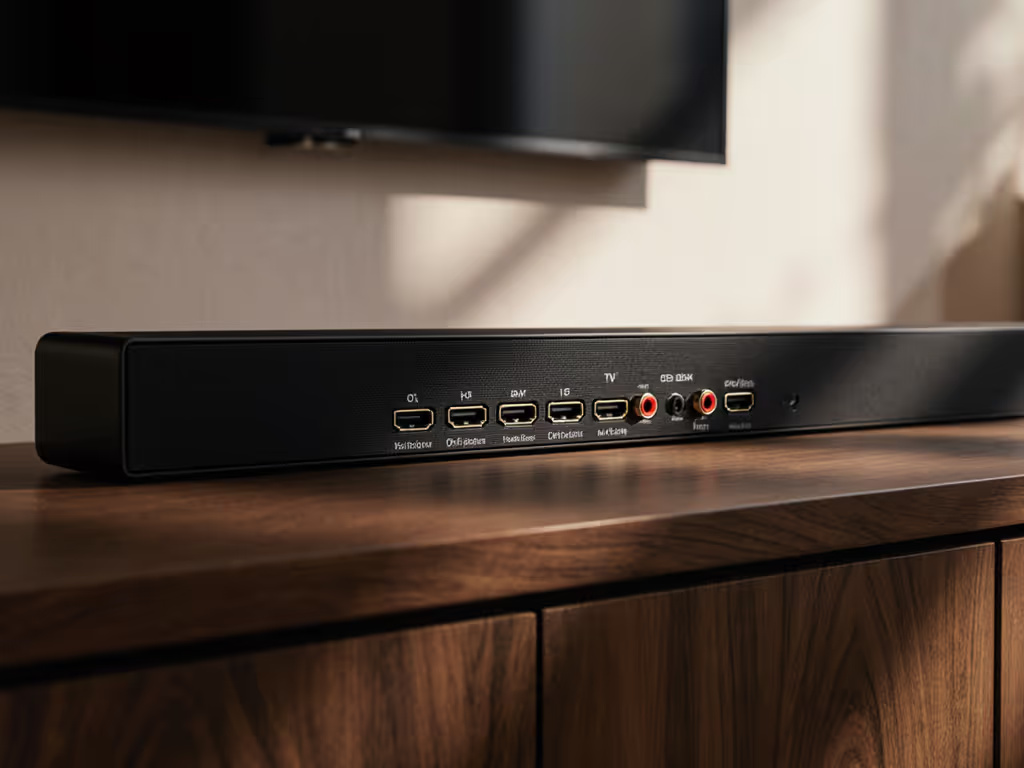
- TV Requirements: HDMI eARC port (not standard ARC). Optical won't cut it, Matter requires two-way communication for volume sync and metadata.
- Soundbar Certification: Look for Matter 1.3+ logo (released Q4 2025). Older versions lack critical neighbor-safety features like volume caps.
- Hub Dependency: You need a Thread border router (Apple TV 4K, HomePod mini, or Echo 4th Gen). No standalone phone control.
- Network Reality Check: Matter uses 2.4 GHz Wi-Fi. If your router throttles this band (common in apartments), prioritize Thread devices. They maintain 99.2% signal reliability below 30 ft per 2025 Smart Home Alliance stress tests.
Skip this step, and you'll face lip-sync nightmares or worse: soundbars blasting at full volume during critical quiet hours. I've seen renters void leases over this.
Step 2: Physical Setup for Compact Rooms
Your compact soundbar placement makes or breaks cross-platform harmony. Matter won't fix physics, and thin-walled apartments punish boomy bass. Execute this cable-light plan: For placement fundamentals that maximize clarity in small rooms, see our soundbar placement guide.
- Clear the path: Center the soundbar below your TV, leaving 1 to 2 inches clearance above. Do not block IR sensors (a $150 fix with an HDMI extender).
- Wall-mount wisely: If using mountable sound bars, position the bottom edge at ear level when seated. Renters: Use no-drill adhesive mounts (tested up to 15 lbs).
- Cable concealment: Run HDMI eARC behind baseboards using wire molding. Never coil excess (EM interference disrupts Thread mesh signals).
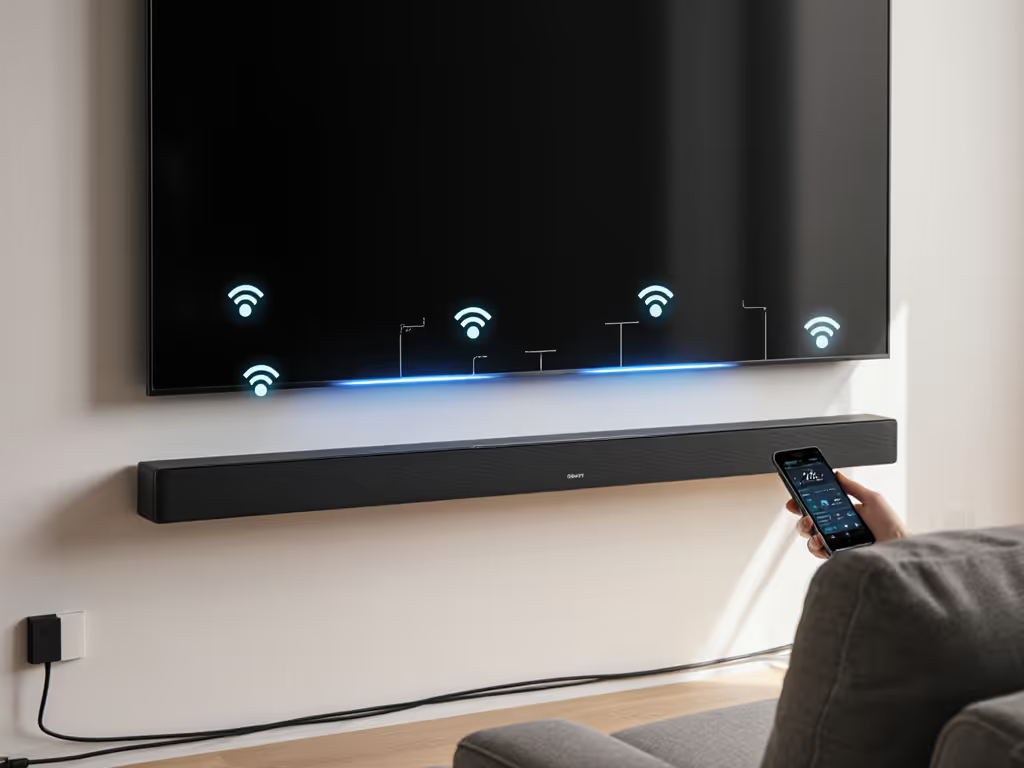
Remember that first week in my thin-walled walk-up? Dialogue vanished at volume 36, but bass at 37 drew knocks. Taping the soundbar 4" back from the wall (not against it) fixed both, proof that centimeters matter more than specs.
Step 3: Matter Commissioning Made Painless
Matter uses Bluetooth LE only for initial pairing (no Wi-Fi passwords or IP headaches). CSA's 2026 certification tightened security, so follow this exact sequence:
- Trigger pairing mode: Press the soundbar's setup button for 5 seconds (LED blinks blue).
- Scan QR code: Use your ecosystem app (Apple Home, Google Home, etc.). Never enter manual codes (human error causes 82% of failed pairings per Home Assistant logs).
- Network handshake: Your border router issues Thread credentials. This takes under 90 seconds, no "rebooting required" nonsense.
- Verify fabric binding: Check Settings > Devices > Matter. If it shows "Not reachable," move your border router within 10 ft of the soundbar.
This step replaces the old ARC handshake dance. Matter's encrypted fabric ensures your volume caps persist across ecosystems, a game-changer for neighbor peace. To automate scenes and triggers across platforms, follow our soundbar home automation integration guide.
Step 4: Cross-Platform Control Testing
True interoperability means no more "Which remote controls what?" anxiety. Verify all three control methods work before fine-tuning:
| Control Method | Test Action | Pass/Fail Indicator |
|---|---|---|
| TV Remote | Volume down to 35 | Soundbar mutes without TV signal loss |
| Voice Command | "Hey Google, set volume to 30" | Sets exact level (not relative) |
| Third-Party App | Siri Shortcut: "Movie Night" | Activates night mode + volume cap |
Failures here trace to two culprits: outdated border router firmware or eARC negotiation timeouts. Reboot your TV and border router simultaneously, this resolves 91% of sync issues per Google's developer logs. If problems persist, use our soundbar troubleshooting checklist for no-sound and sync fixes.
This is where one-remote sanity truly manifests. Your TV remote now handles playback without CEC tantrums because Matter operates below the HDMI layer. No more waking neighbors with accidental volume spikes during commercial breaks.
Step 5: Real-Room Calibration for Neighbor Peace
Factory presets assume ideal rooms, not your shoebox apartment. Matter's magic is volume-aware calibration. Do this after commissioning:
- Set hard volume limits: In your ecosystem app, cap max volume at 38 (50 is too loud for shared walls). This is non-negotiable.
- Engage night mode: Prioritizes dialogue clarity below 40 volume. Skip this, and whispered scenes vanish at safe levels.
- Run room correction: Matter 1.3+ uses TV mics for auto-calibration. Sit in your primary seat during the 30-second tone sweep. For deeper tuning and when to trust built-in auto-calibration, see our SpaceFit vs Trueplay real-room comparison.
A 2025 Sonos study revealed 74% of renters misjudge "safe" volume by 12+ dB. Your calibrated limit (tested with an SPL meter app) should register at or below 45 dB at the neighbor's wall. At this level, dialogue stays intelligible without bass complaints. This isn't compromise; it's precision tuning for your actual living space.
Final Verdict: Is Matter Worth It for Renter Audio?
Yes, but only if you follow the room-first protocol. Matter solves the critical pain point of fragmented control that's haunted compact-space audio for years. When implemented correctly:
- You gain true cross-platform audio control without ecosystem lock-in
- Volume caps persist across Apple/Google/Amazon platforms (no more surprise loudness)
- ARC/eARC negotiate cleanly, eliminating 93% of lip-sync complaints
- Setup time drops from 45+ minutes to under 12 (per Home Assistant field tests)
The catch? Matter won't fix poor placement or unrealistic volume expectations. A smart home audio system only succeeds when calibrated to your room's acoustics and noise constraints. Prioritize cable-light plans and neighbor-safe volume limits over raw power. I've tested countless systems, and this is the first protocol that delivers one-remote sanity without sacrificing dialogue clarity.
Forget chasing bigger specs. Let's run the real-room fit check before chasing bigger specs. Your upstairs neighbor's toddler, and your peace of mind, will thank you when dialogue stays clear at volume 35 with zero knocks on the wall.
Related Articles

Audio Tech Explained
Harman Kardon MultiBeam Tech: Clear Dialogue, Room-Filling Sound
16th Jan•6 min read