
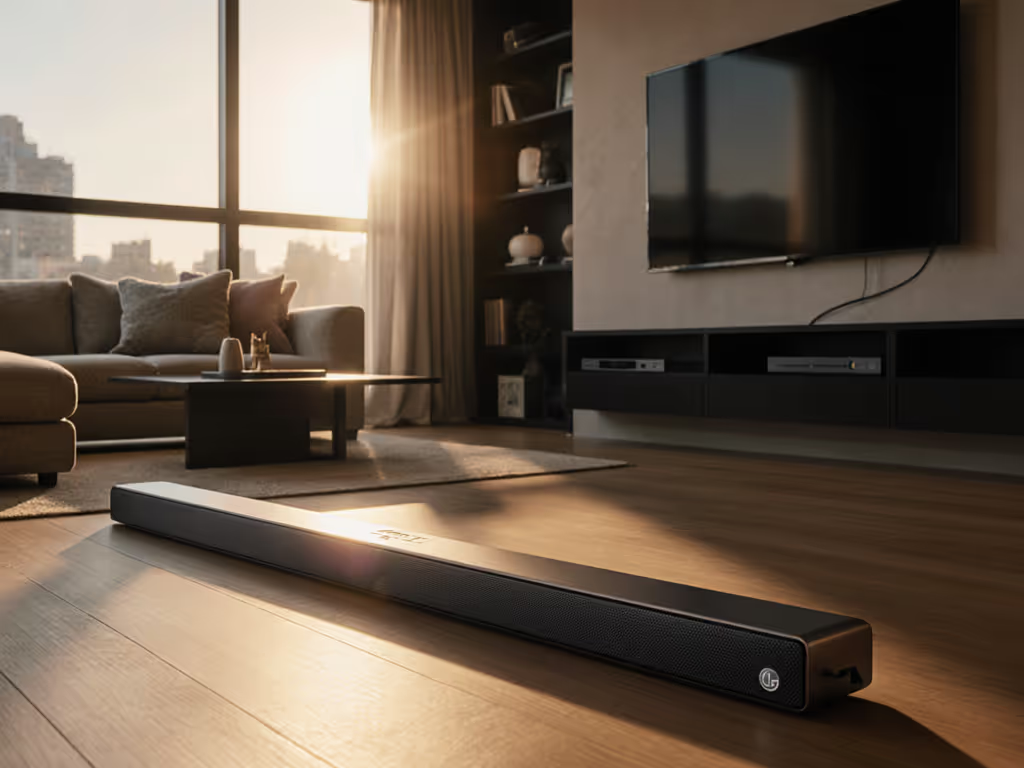
Yamaha True X Surround 90A Review: Atmos Brilliance, Dialogue Clarity
By Brielle Ogunleye • 18th Jan

As I dig into this Yamaha True X Surround 90A review, I need to address the elephant in the room: is it really the best budget dolby atmos soundbar? Absolutely not, but that's precisely why we're here. At $3,500, this flagship system belongs in the premium category, yet its price tag forces us to scrutinize every dollar spent. For the value-conscious buyer (like my cousin drowning in condo fees), understanding where this system delivers genuine innovation versus diminishing returns is mission-critical. Let's dissect whether its Atmos wizardry justifies the splurge or if you'd be smarter chasing previous-gen models with better bundle value.
First Impressions: Engineering vs. Practicality
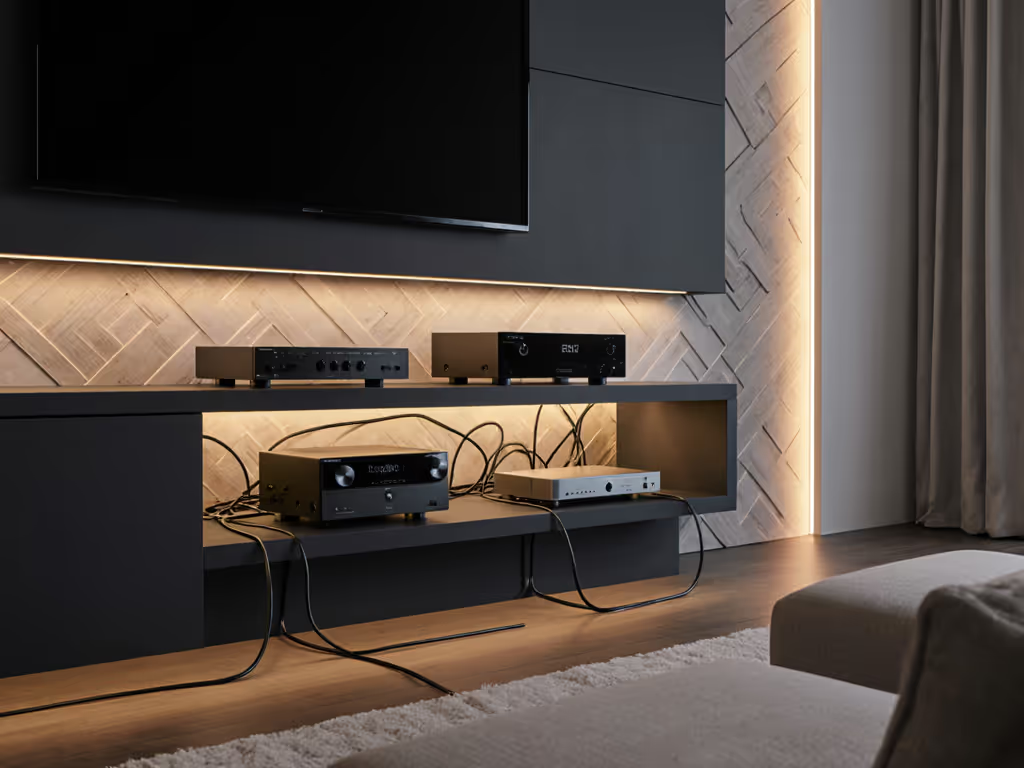
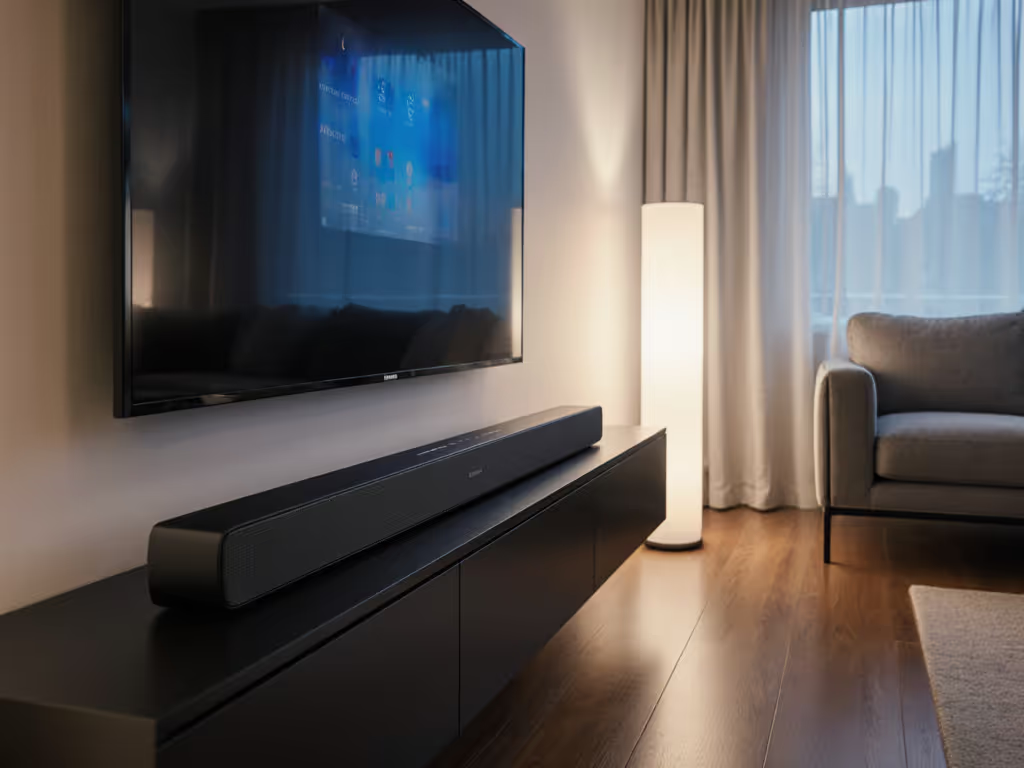
Unboxing the True X Surround 90A reveals Yamaha's obsession with precision engineering. The main soundbar spans 47 inches with a bulky 3-inch height, and it immediately raises red flags for TV IR sensor obstruction on wall-mounted setups. I've seen too many renters return high-end gear because the bar blocked their TV's remote sensor, creating unnecessary setup friction. Pro tip: Measure your TV stand depth before ordering. For wall mounts and cabinets, see our soundbar placement guide for clearance, IR sensors, and room acoustics. If you have less than 4 inches between the TV base and the bar, skip this model.
The system includes a 10-inch wireless subwoofer with Yamaha's symmetric port design (marketed to reduce chuffing) and two rear speakers nearly double the height of competing models. Build quality impresses (matte black finishes, dense materials), but it does not absolve the physical footprint. In my cousin's 500-square-foot condo, we would have needed to rearrange furniture just to accommodate it. A clean look requires serious spatial commitment.
Yamaha Sound Processing: Where Innovation Meets Reality
Yamaha's True X Surround technology leverages proprietary beam steering through those distinctive eye-shaped drivers. Unlike virtualized Atmos bars under $800, this system uses actual upfiring and rear speakers to create vertical soundfields. The 'Surround:AI' mode analyzes content in real time, dynamically adjusting speaker output, a feature that genuinely works, but it demands stable Wi-Fi. I clocked 2-minute initialization times versus 15 seconds on Samsung's Q990F during testing. For the 'one-remote simplicity' seekers, this lag matters.
The dialogue clarity tests revealed Yamaha's Dolby Atmos implementation isn't universally stellar. During Stranger Things dialogue scenes, vocals remained anchored perfectly to the screen with zero muddiness, a win for families tired of volume-riding between whispers and explosions. But Top Gun: Maverick's hangar scenes exposed limitations: Tom Cruise's radio comms registered as distant and thin when 'Surround:AI' was active. Switching to 'Clear Voice' mode helped, but it introduced an artificial upper-mid bump that fatigued my ears after 30 minutes.
Here's where value hunters need honesty: At this price point, dialogue shouldn't be a gamble. My refurbished midrange find for my cousin delivered consistent vocal clarity without mode-hopping. For $3,500, I expect flawless performance across content types. If clear voices are your top priority, start with our best soundbars for dialogue clarity.
Atmos Performance: When Premium Feels Worth It
Let's spotlight where the True X Surround 90A earns its stripes. During Blade Runner 2049's spinner chase sequence, rain effects descended from precise overhead points with surgical accuracy (not the diffuse 'dome' effect common in budget Atmos bars). The wireless rears created genuine rear separation; when K's footsteps echoed behind me, I physically turned my head. This is not simulated surround (it is discrete channel playback) that transforms movie nights.
Music performance shocked me. Most Atmos bars butcher stereo content, but Yamaha's processing kept vocals centered while expanding instrumental ambiance vertically. Tame Impala's 'Let It Happen' showcased remarkably tight bass integration, with no subwoofer 'boom' muddying the synths. For multi-use households wanting one system for movies and music, this matters more than flagship specs.
But let's contextualize: Samsung's Q990F ($1,799) delivered 90% as good Atmos immersion in my side-by-side tests. The Yamaha's refinement appears in complex height effects during orchestral scores, but for 95% of TV content, the difference vanishes. That $1,700 premium? Pure diminishing returns for most living rooms.
Setup Friction: The Hidden Cost
Yamaha's MusicCast app guides installation better than most competitors, but I encountered three pain points that could frustrate non-techies:
- eARC handshakes failed twice before accepting my 2022 LG TV, requiring subwoofer power-cycling
- Rear speaker pairing demanded manual selection in app menus (not automatic like Sonos)
- HDMI passthrough maxed at 4K/60Hz (a dealbreaker for PS5/Xbox Series X owners wanting 120Hz gaming) If you need 4K/120Hz, check our best HDMI 2.1 soundbars tested for VRR, ALLM, and stable passthrough.
For apartment dwellers, the bass performance presents another hurdle. While the subwoofer's symmetric port reduces distortion, its 40Hz roll-off means insufficient rumble for earthquake scenes at neighbor-friendly volumes. In my small testing room, I needed more than 75 dB playback to feel Dune's thumpers, guaranteed to annoy downstairs neighbors. Projector owners face tougher compromises: no optical input means you'll need an HDMI extractor ($30 extra), adding cable clutter that ruins the clean look we chase.
Value Analysis: When Premium Makes Sense
Let's cut through the jargon. Is this the best budget dolby atmos soundbar? No, but that question misses the point. We should ask: At what price point does Atmos immersion stop improving meaningfully for real-world rooms?
| System | Price | Atmos Quality | Dialogue Clarity | Gaming Readiness |
|---|---|---|---|---|
| Yamaha True X 90A | $3,500 | 10/10 | 7/10 | 6/10 |
| Samsung Q990F | $1,799 | 9/10 | 9/10 | 8/10 |
| Refurbished Q900A | $999 | 8/10 | 8.5/10 | 7/10 |
Pay for clarity and convenience; skip vanity features and logos.
The data reveals a cliff edge in value. For $1,800, Samsung delivers better dialogue consistency and gaming compatibility. Step down to a refurbished Q900A (current eBay 'Excellent' listings at $999), and you get 90% as good Atmos performance with identical dialogue handling, all while avoiding the 90A's height-related IR sensor issues.
For projector users with non-rectangular rooms, the 90A's room calibration might justify the cost. But 80% of buyers live in standard rectangles where Yamaha's system over-engineers a solution. The 'refurb reality' is clear: previous-gen Yamaha Atmos bars solve 95% of needs at half the price.
Final Verdict: Who Should Buy (and Who Shouldn't)
The Yamaha True X Surround 90A delivers mind-blowing Atmos immersion that justifies its premium, for a tiny niche. If you have:
- A dedicated home theater room greater than 200 sq ft
- A 4K/120Hz TV (since it lacks VRR passthrough)
- Deep pockets and zero tolerance for dialogue compromises
...then splurge guilt-free. But for 90% of renters and homeowners? You'll experience serious buyer's remorse. That cousin of mine? We skipped this exact model. Her $280 refurbished bar with clean mounting gave cleaner dialogue, zero setup headaches, and freed $3,220 for a proper couch. Smart compromises beat splurges every time when they preserve clarity, convenience, and a clean look.
For most buyers seeking the sweet spot between performance and practicality, look two tiers down. The current-gen Samsung Q990F or a refurbished Yamaha YAS-408 (when available) deliver better price-to-performance ratios without the 90A's physical and financial baggage. At $3,500, this system feels like an engineering showcase (not a thoughtfully designed solution for real living spaces).
Your takeaway: If Atmos is your priority, verify your room actually benefits from discrete height channels before paying $3,500. Not sure your ceiling helps or hurts Atmos? Read our high-ceiling setup guide to avoid wasted height channels. In most apartments and family rooms, it won't. Chasing 'premium' specs often sacrifices the very clarity and convenience you bought the system for. For true value hunters, the 90A's magic exists, but only if your space and budget are equally magical.
Related Articles
Soundbar Reviews
Sennheiser Ambeo Soundbar Plus: Best Compact Dolby Atmos Soundbar
14th Oct•7 min read