Comparisons & Face-Offs
Accent Clarity Soundbar Comparison for Multilingual Dialogue
2nd Jun•13 min read
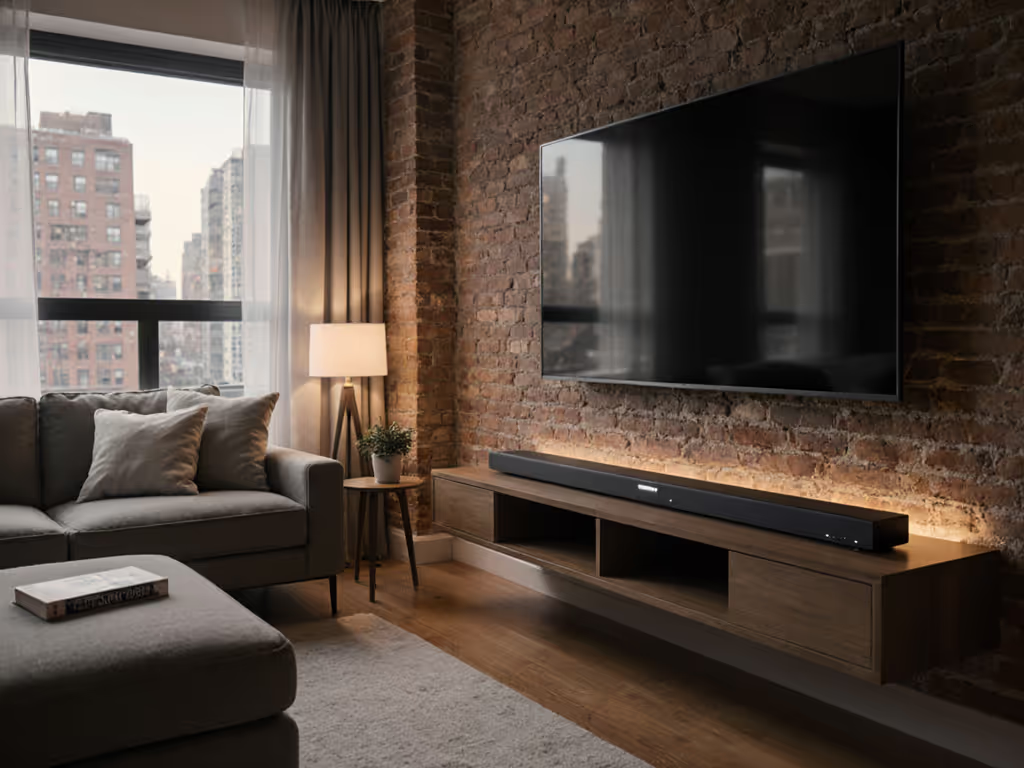
Apartment living demands a soundbar comparison that balances real-world constraints: tight wall space, shared walls, and the constant battle between whisper-quiet dialogue and thundering explosions. The sweet spot isn't the flashiest model on the shelf (it's the one that delivers small room soundbar performance without waking neighbors or overwhelming a cramped layout). This guide cuts through the noise to show you which compact bars actually solve the dialogue-clarity problem at sensible volumes, and which features genuinely matter when you can't blast bass into the void.
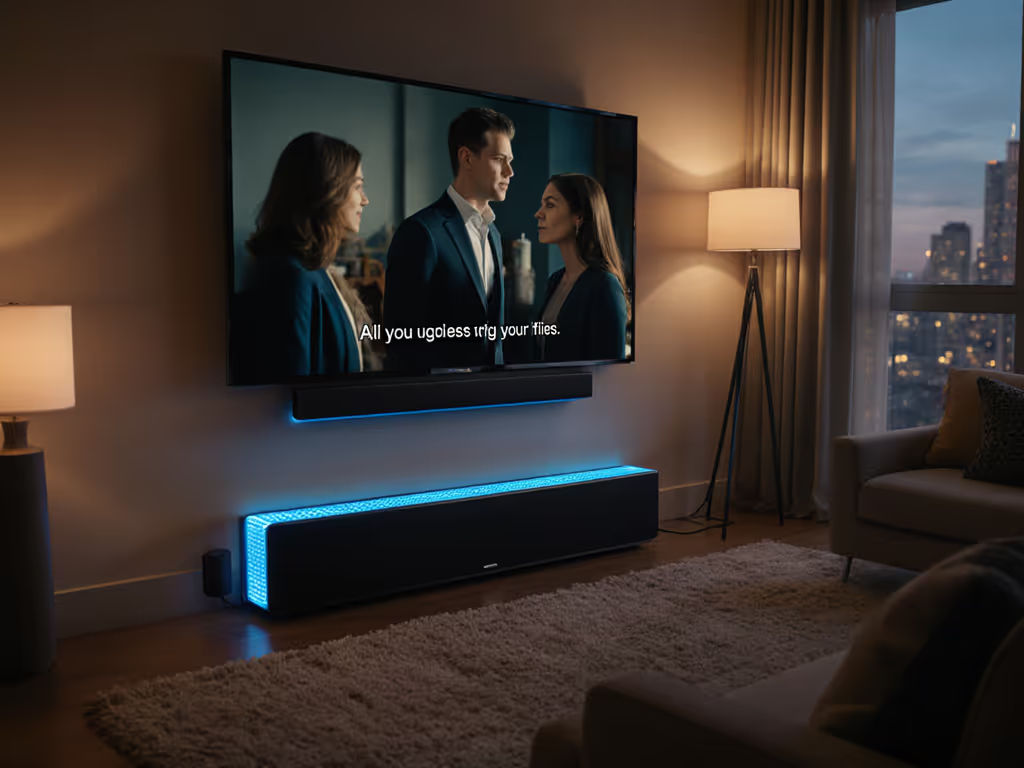
Built-in TV speakers don't just sound bad (they make dialogue muddy), forcing you to ride the volume remote constantly. A proper soundbar fixes that by centering voices in the stereo image and boosting the midrange where human speech lives. But here's the trap: many compact bars market "powerful bass" as a selling point, when what apartments actually need is low-volume dialogue clarity without boom.
In smaller rooms, bass doesn't need power (it needs control). For data-backed picks by room size, see our small-room soundbar performance tests. A 15-cubic-meter bedroom amplifies low frequencies naturally; throw a subwoofer into that space, and neighbors three units over feel the rumble. The best apartment soundbars recognize this tradeoff: they prioritize cleaner highs and mids, tune bass conservatively, and let you dial subwoofer output down, or skip it entirely if you're in a rental and short on space.
Three models emerge as genuinely practical choices for apartments, each solving a different version of your problem.
At less than 26 inches wide, the Sonos Beam (Gen 2) is the go-to for most apartment dwellers.[1] It supports Dolby Atmos (a meaningful feature if your streaming apps or TV broadcasts include it) and fits beneath nearly every monitor or TV stand without feeling cramped. The speaker design delivers crisp dialogue by default, and you can expand the setup later with compatible Sonos speakers if you move to a bigger space.[1]
The practical advantage: it's compact enough that setup friction is nearly nonexistent. Wall-mounting optional, slim footprint on furniture, HDMI eARC in, done. No separate subwoofer means no placement puzzle in your bedroom or studio.
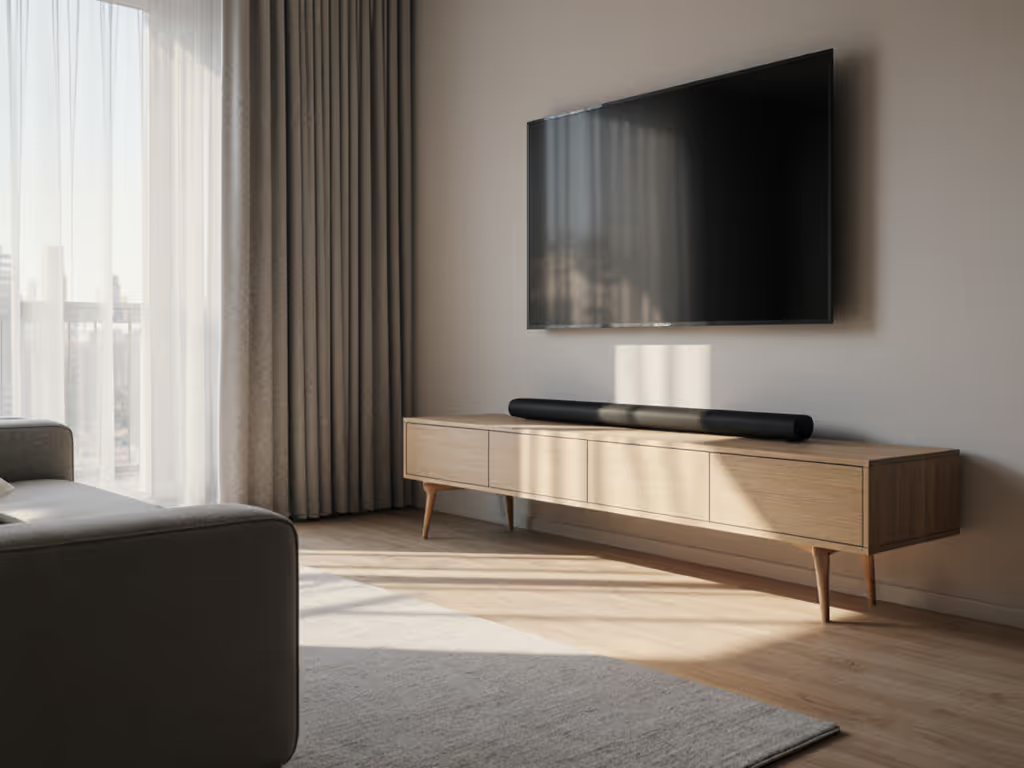
The tradeoff is bass depth. You won't feel action sequences in your chest, and that's intentional for apartments. If you need subwoofer-level impact later, you can buy one separately, though few apartment dwellers actually do, because neighbor-friendly bass management beats immersion fatigue.
At just 15 inches wide, the Polk MagniFi Mini AX is the smallest viable option if your TV stand is absurdly tight.[2][3] It pairs with a wireless subwoofer (small enough to tuck out of sight), making it ideal for apartments where you want some bass but can manage placement and volume carefully.[3]
What makes this combo compelling for small spaces: the 15-inch bar blocks almost no IR sensor, and Polk's wireless sub means no cable-management friction.[3] You can literally move it three times before the evening is over, which matters in rentals where you're still figuring out the layout.
The dialogue clarity is solid (Polk tuned the midrange for vocal presence), and the Dolby Atmos and DTS:X support via virtualization (not physical height drivers) gives you surround ambience without dedicated ceiling speakers.[3] For a studio or bedroom, this is the least-disruptive sonic upgrade you can buy.
If you want a no-nonsense bar under $150, the Yamaha SR-B20A punches above its price point, though it trades away Atmos and some of that dialogue presence.[2] It's the math if you're testing the waters before committing bigger money, or if your lease is short enough that upgrade regret is irrelevant.
Compact soundbars win here, but only if you pick one that actually fits your furniture and your wiring situation.
Wall mounting vs. stand placement: Renters often can't drill. The Sonos Beam and Polk Mini AX work perfectly on a TV stand or media console; neither requires wall mounting, which removes a major setup friction point. For optimal bar height and distances, follow our soundbar placement guide. If you later own and want to wall-mount, both are compatible, but you're not forced into it.
Cable routing: Fewer cables = cleaner living space. Both the Sonos and Polk options need only a single HDMI (eARC) and power. If your TV doesn't have eARC, optical audio works as a fallback, but you'll lose Atmos. Learn the real trade-offs in our HDMI ARC vs optical guide. Plan for this before purchasing; it's the difference between "wow, clean" and "why are there cables everywhere."
Wireless subwoofer vs. wired: The Polk Mini AX ships with a wireless sub, eliminating one cable. If you're in a studio apartment and that subwoofer becomes clutter you resent, you can simply turn it off or return it. With a wired sub, you're committed to placement and power routing, setup friction that lingers.
Dolby Atmos via eARC creates a convincing overhead soundstage illusion, especially for movies with discrete height cues (aircraft passing overhead, rain from above, etc.). Both the Sonos Beam and Polk Mini AX support this.[1][3] In a 300-square-foot apartment, Atmos isn't a luxury (it genuinely transforms how immersive 15-minute episodes or gaming sessions feel). The height virtualization via eARC-enabled bars is subtle but noticeable.
Here's the catch: if your TV doesn't support eARC (many older models don't), you're stuck with optical audio, which limits Atmos to Apple TV 4K and certain streaming sticks. That's not a deal-breaker (most living-room content doesn't need it), but it's worth confirming your TV's audio-out before buying.
This is where smart compromises beat splurges. A compact bar tuned conservatively for bass (like the Sonos Beam or Polk Mini) is 90% as good as a massive soundbar with a separate subwoofer, and it won't trigger passive-aggressive knocking on your wall at 10 PM.
Neighbor-friendly soundbar settings matter: most bars include a "night mode" or dynamic leveling that compresses loud explosions and boosts quiet dialogue. To dial these modes correctly, use our soundbar presets guide. Use it. Test it at the volume level you actually watch at (most people need 60-70 dB for comfortable evening viewing, not the 90+ dB demo volumes audio reviewers test).
If you do add a subwoofer (whether now or later), place it away from shared walls, keep the crossover frequency at 100 Hz or higher (which keeps directional bass focused on your seating area rather than bleeding into neighboring units), and set volume 5 dB lower than you think you want. Your neighbors will thank you, and you'll still feel the bass where it matters.
One last layer: the practical stuff that separates "this is annoying" from "this was worth the money."
My cousin's new condo begged for tidy sound without wrecking savings. We auditioned three previous-year bars, logged ports and remotes, and returned the flashiest one. A refurbished midrange model plus a slim mount came to $280. Dialogue popped, bass behaved, living room looked clean, and no buyer's remorse. That's refurb reality: you often get 95% of current-year tech at a 40% discount, and a soundbar's internals age slowly if the firmware is stable.
| Factor | Sonos Beam (Gen 2) | Polk MagniFi Mini AX | Yamaha SR-B20A |
|---|---|---|---|
| Width | < 26" | 15" | ~30" |
| Dialogue Clarity | Excellent | Very Good | Good |
| Atmos Support | Yes (eARC) | Yes (eARC) | No |
| Subwoofer Included | No | Yes (wireless) | No |
| Setup Friction | Minimal | Minimal | Low |
| Neighbor-Friendly Bass | Yes (conservative tuning) | Yes (controllable sub) | Yes |
| Price Range | $400-500 | $350-450 | $100-150 |
| Best For | Renters wanting Atmos + clean look | Tiny studios or minimal space | First-time upgrade, tight budget |
Pay for clarity and convenience; skip vanity features and logos. Start here:
Measure your TV stand or wall space. If it's under 20 inches wide, the Polk Mini AX is your only real option. If you've got 24+ inches, the Sonos Beam is worth the extra $100 for Atmos and brand reliability.
Confirm your TV's audio outputs. Check the manual or Settings for eARC and optical audio. If your TV only has speakers-out (no eARC, no optical), you'll need an external streaming stick or a soundbar with Bluetooth passthrough (both add complexity).
Test in your room, not a showroom. Buy from a retailer with a 30-day return policy. Set your soundbar at the volume you actually watch at, usually 60-70 dB, not the 85+ dB demo level. If dialogue is crisp and bass is controlled at that level, you've found it. If you're cranking volume to hear people talk, return it.
Postpone the subwoofer decision. Most apartments don't need one immediately. Live with the compact bar for a month. If you miss bass, add a wireless sub then. If you don't, you've just saved $200 and gained floor space.
The soundbar that wins isn't the one with the most specs, it's the one that sounds 90% as good as the showroom demo but disappears into your living space, doesn't trigger your landlord's noise complaints, and lets you stop fiddling with volume every five minutes. Compact, smart, and unobtrusive. That's the apartment win.